Power Meditation 2
2026-10-24
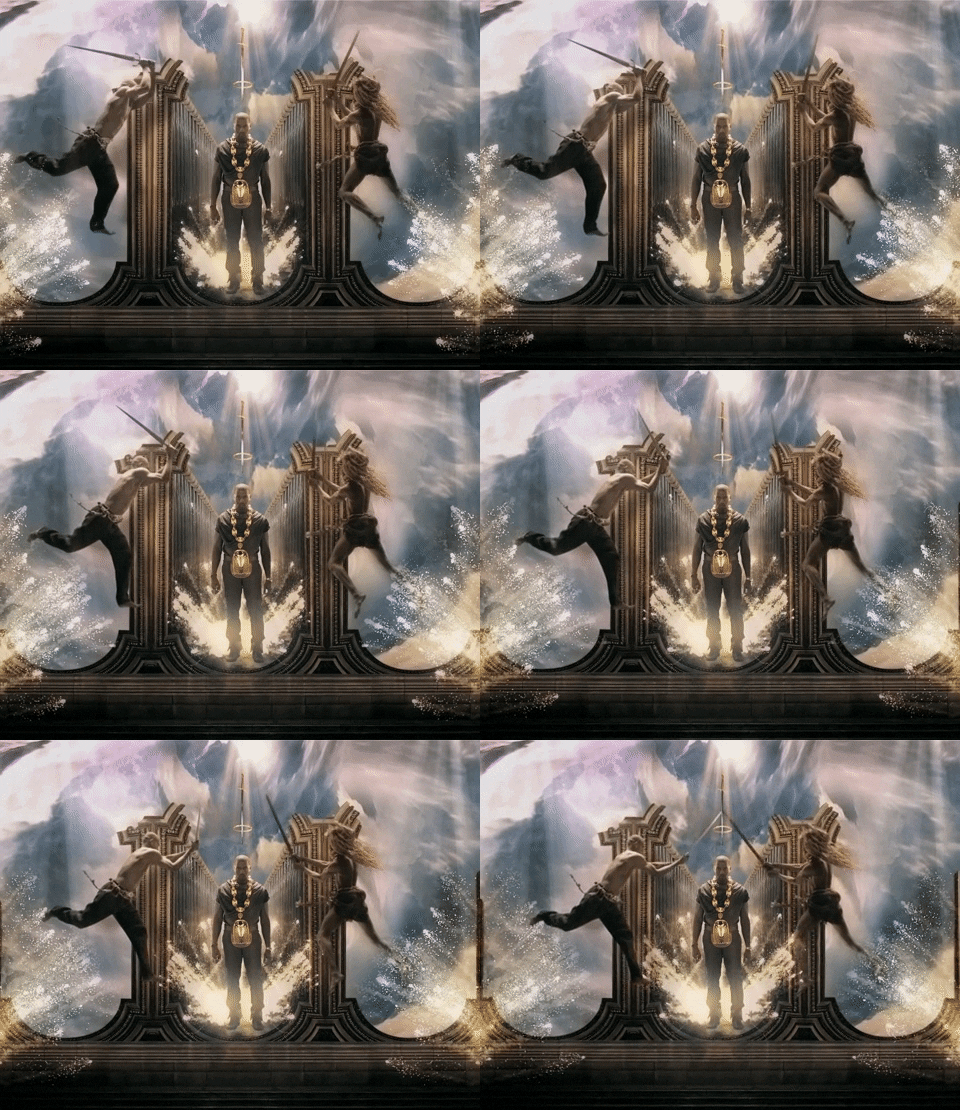
This morning, I've been meditating on power again, though hopefully I can expand a bit from when I did that last time. Societies in antiquity and beyond had a greater respect for things that carry a lot less weight than they used to: truth, power, that kind of stuff. This respect could perhaps be explained by a general lack of knowledge—that people back then filled in the gaps where they could. I think that's generally true, but where we differ today is that our hubris leads us to believe we have a more unmitigated potential to actually "fill in" those gaps. Because of this, people speak with the same sense of authority as if they were actually espousing a Capital-T truth, but this notion comes from a mostly narrow tunnel of conscious vision—that empiricism, positivism, and the like are the only gateways through which we can acquire a greater understanding of the world around us. The way I see it, we are still stuck in antiquity—filling in the gaps where we can, but only with a false sense of authority. Back in the day, something was true because people in power made it so, and there was a greater level of respect for that authority. Nowadays, we see truth as something absolute and objective, yet this is difficult to apply in practice because there is no overarching authority to apply that truth to fundamental contexts.
Unfortunately, people in power nowadays have learned to obfuscate truth as a means to consolidate their power. We see stories on the news constantly of great cabals, institutional cults, and things that sound completely made-up—and they are made to be true. If you think the "Epstein Class" is anything more than a misdirection of information and engagement, I am sorry to tell you that you have been fooled. What, you're just going to look at some weird pictures and screenshots of "emails" and say that's actually what went down? Why? Because it came from the DOJ? Grow up man, seriously.
The onus is on me, then, to answer the implicit question: how does the obfuscation of truth consolidate power? Well, in a word, the answer is capitalism. In a few more words, I think it's important to understand the flow of capital in context with power. Sure, pretty much every country on the planet produces its own money printed from a centralized treasury, and that money is then distributed to banks who then give out loans to facilitate economic activity. However, this system that seems centralized is actually quite decentralized and is extremely difficult to control. Any time I read anything about monetary policy, it sounds like some wizard trying to control the weather—a futile attempt to bring order to a system that fundamentally works in ways that cannot be rationally understood. Human behavior is not rational, and nature itself has far too much variance to allow capitalism to be executed with any set of fundamental rules.
As such, world leaders are in a stickier situation than they used to be. When capital is what rules the world, the unfortunate reality is that there is no singular individual or group that can meaningfully hold and consolidate power. What leaders realized in the 20th century, however, is that the paradigm of capitalism allows for the commodification of not just material things, but immaterial ones as well: ideas, impulses, opinions, and sentiments. Capital is no longer confined to currency or material resources, but immaterial ones as well. Information is just as powerful of capital as money or any other means of production that exists. What's interesting is that information isn't bound to a treasury; it is by no means centralized, and as such, it allows leaders to manipulate it in order to consolidate something that used to be absolute.
That thing is consent.
I don't want to be the crazy guy and start spewing out conspiracy rhetoric—that everything in the news is made-up and that everything is an intentional misdirection to conceal affairs that are more nefarious. That's just dumb. I believe that most journalists get into their line of work because of their desire to pursue truth for the people, and the difficult reality we are contending with isn't conspiratorial, but simply one that has been spiritually discombobulated. What seems like a deconstruction of authority has actually turned into an upheaval of chaotic and temporally boundless spirits; they are controlling the flow of things, and we've castrated our ability to command them. When people talk about why things feel "off," that's what they're referring to. We are truly in a world that runs as its own self-perpetuating machine, and literally nobody knows how to turn it off.
Well, I know how to turn it off, but I'll save that work for another day.
Support my work with Liberapay
Bitcoin address: bc1qtgqvj6qjxnaxkns20x5rcwnxvv3jqzhduvvxfc