Active Surrender
2026-05-19
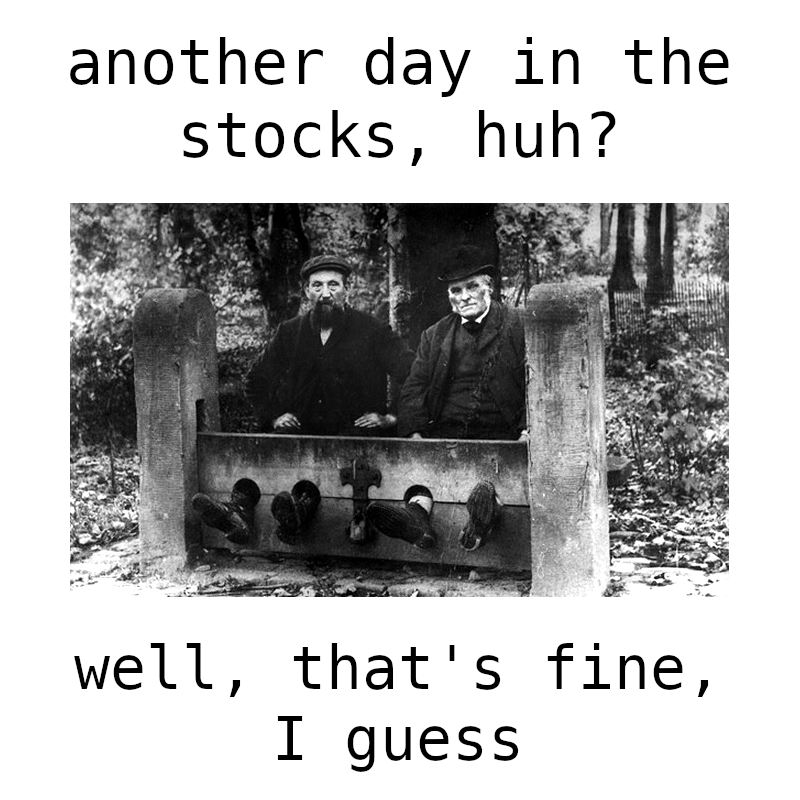
Carpe diem, amirite ladies?
You know, even when I look at pictures of people who are now dead and wonder if they'd actually be telling me to seize the day—there's this small inclination I have to call bullshit, or at the very least question what that even means. The current meme going around in Silicon Valley, and other places where AI is getting shoved down people's throats at work, is that a top candidate is someone who is "high-agency." I guess that's just a fancy rebranding of other corpospeak colloquialisms like "self-starter" or whatever, and it's funny because the euphemistic language is such a subtle crack of the whip. "Show initiative, unless we don't like it," or something to that effect. It's a strange thing to me because our pluralistic world seems to hold great esteem toward self-determination, that we are the ones responsible for our choices and lot in life. It seems that there's this weird dissonance between that value for self-determination and submission to authority. Do what you want, unless other people stop you. In a link log, I found myself getting perturbed by the American liberalism espoused by Cory Doctorow, and I'm still going down this rabbit hole of thought.
To me, this dissonance comes from territorial status-signaling. In a world that necessitates some kind of balance or harmony, there must be the users and the used, haves and have-nots, and a general zero-sum game. But it's a strange position we find ourselves in because everyone wants to have, but no one wants to have-not. Everyone wants to be the master, never the servant; always the shepherd, never the sheep. It stems from insecurity, but not a self-conscious one. People are just afraid of going without, and given how fortunes change outside of our control most of the time, it's a real and justified fear. But for me, I try to understand the importance of two things: first, a mindset of abundance. Scarcity is a real thing in many ways. There's only so many hours of daylight, so much gas in the tank, but even outside of many post-scarcity circumstances created by industrialization—we don't really have to go without if we don't want to. Scarcity is only real because we perceive demand as an infinite thing, but it doesn't have to be.
Second, not-having is in itself a good thing. It helps you take inventory, and also reminds you of what actually matters in ways that material wealth never can. In the same way that it's avaricious to hoard wealth, I honestly feel the same about hoarding the day. To seize the day is to say "today is mine," but is it really? Are you really that prideful? I mean, I don't know if you are; can a guy just be a little rhetorical? Anyway, in my times going through rehabs and treatment centers for my Psychiatric Problems, there's a clinical turn of phrase that goes around: your locus of control. When treating problems like substance abuse and general socially maladaptive tendencies, an important part of that education involves learning what you're actually in control of so that you can better manage relationships and stay functional and sober. When engaging in personal relationships, it's important to understand that you cannot be in full control of the actions of others, and that the one thing you always have full control over is your own thoughts and behaviors.
It's important to know when to take action in life, but it's more important to discern when you should simply let things happen. The latter is the much more difficult skill to master; even in taking what could be called a non-action, that in and of itself is a choice that we have to make. But it's the harder choice because so much of our thinking is active: "What should I do?" I've found that in so many circumstances, the right choice isn't what I would call passivity, but an active surrender. This is such a hard thing to do, given the world's propensity for that territorial status-signaling. Especially for myself as a man, it's so culturally embedded to be someone who takes action, "gets shit done," as it were. It's a mode of competition with many other men, and a sign of value for many women. To be a man is to go out into the world and take what you can in the name of provision. As a man, if you can't provide, there's something wrong with you. Don't worry, friends, I will not engage with the redpill manosphere gender war rhetoric. But I think we all feel those times where we feel like we're not good enough or useful.
That's why we try to seize the day, right? To find a sense of belonging, self-esteem, what have you—we have to take from the bounties of this earth to do so. But none of that will ever be enough, will it? What if it was? The one prayer that Christ taught people during His life on earth was this:
Our Father who art in heaven, hallowed be thy name; thy kingdom come, thy will be done on earth as it is in heaven. Give us this day our daily bread, and forgive us of our debts as we forgive our debtors. And lead us not into temptation, but deliver us from the evil one. For thine is the power, and the kingdom, and the glory forever.
The part I've been most thinking about is that line: "Give us this day our daily bread." Some biblical history for you: when Moses was leading the people of Israel to the Promised Land in the wilderness, God only let them find the resources they needed to make just a day's worth of bread for everyone, each and every day for the next forty years. Many left the nation to go find more, but those who stayed got to the Promised Land with the help of Joshua. The way I see it, the day isn't something that needs to be seized. Our locus of control is quite small, but within that, we can find the strength to march on through our own personal wilderness through a simple act of faith each day; everything else will figure itself out.
Don't seize the day; let it seize you.
Bitcoin address: bc1qtgqvj6qjxnaxkns20x5rcwnxvv3jqzhduvvxfc