Beyond Privacy
2026-03-06
I've been thinking more about my position on tech privacy. My position is one that I haven't really seen anyone else articulate, and I think it would be valuable to share. I've read several sites and watched videos related to increasing your digital privacy. While that alone is an egregious thing (Why should we have to increase it at all? We should just have it by default.), the measures that most people take to increase their privacy don't even work. On every level of computing—from web apps to CPU firmware—there is a way for some kind of threat actor to track you. Especially if you find yourself on certain shady corners of the internet, there's no stopping the government from finding out your activity and exacting whatever kind of surveillance they want. Even if you take all the "proper" steps to increase your privacy on your personal devices, you still have to contend with things like security cameras at every corner.
Ultimately, the technology we use is critical societal infrastructure. Your right to use it will always be dependent on the state.
However, I am not espousing some kind of futile message. Instead of trying to "increase" privacy in the typical sense, what I am suggesting is that we understand what our priorities should be. I use hardened browsers, content blockers, DNS resolvers, and other privacy-focused technology, but I don't use them to mitigate surveillance. Instead, I use them to protect myself from advertising, propaganda, and disinformation. Most people use their personal devices for one major purpose: consuming media. Our desktops, laptops, smartphones, and tablets are sophisticated media-consumption machines. Compared to even a hundred years ago, we consume at least a hundred times the amount of media our predecessors did. More than that, this media is extremely saturated, dense, and realistic. Whether we like it or not, our lives are defined by the media we consume.
Thankfully, we still have the choice to curate that media. We can still choose what websites we visit, what books we read, and what films we watch. Privacy-focused technology empowers us not to curtail surveillance, but to properly curate our media consumption so that we can protect ourselves from harmful and potentially even traumatic messaging. This messaging runs deep in our culture. The average person consumes thousands of advertisements every single day. We watch dozens of hours of video every week. Most of our days are spent in front of our media consumption machines. So with that, it is our responsibility to contain the deluge of information we find ourselves in and work to maintain our sanity and vigilance in spite of the many snares that digitally surround us.
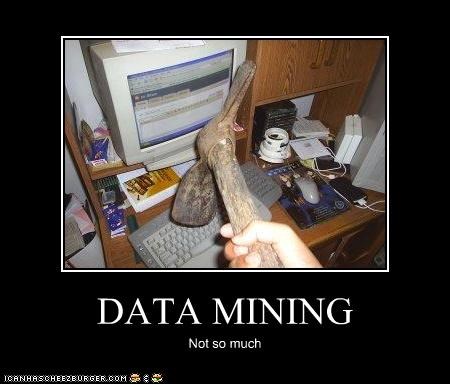
As someone who produces digital media, I understand the importance of this curation. Whenever I'm consuming media, this question always comes to the front of my mind: What is the producer of this content trying to get me to think, and why do they want me to think that? I've found that as I keep asking myself that question, I can keep a cool head when ingesting information. More than that, though, I try to limit my exposure to sources that thrive off harmful information. All mainstream social media is built on propaganda, scams, and outrage. I try to avoid having any accounts there where I can so that I don't get data-mined and fed content that is designed to manipulate me into a certain way of thinking. If I do consume social media content, it's because a friend sent it to me in a message directly. I prefer this way of consuming the content because I get to curate the spaces in which I consume it instead of being fed directly by the beast itself.
I am passionate about culture, and I think it's important to have a certain degree of cultural literacy. Unfortunately, most culture permeates from mainstream social media. That's something I can't control, but I can control my relationship to it by mitigating my exposure to it. I find that, generally, as long as what I'm seeing is shared with me by a person I directly know and can talk to—and not some algorithm—there's a greater degree of validity in that. I can give my feedback to the person sharing it, discuss how it affects us both, and try to come out of it more informed and equipped to handle what will come ahead. I prioritize keeping a clear head in the face of technological upheaval, and I want to do my part to help make the world better. Even if it's just through a personal website, that to me is meaningful enough.
Protect your minds. No one else can do it for you.
Bitcoin address: bc1qtgqvj6qjxnaxkns20x5rcwnxvv3jqzhduvvxfc