Other Unreal Worlds
2026-01-26
I was reading a post from Ran Prieur about being able to tell the difference between AI- and human-made images. It's been tougher for me to think about because the newest models from Google, OpenAI, and the like can produce extremely realistic-looking images and videos. The biggest problem is that everything looks so polished and perfect; the style becomes inevitable and easy to spot. Still, there are lots of people—particularly older people—who can't tell the difference. This makes them even more ripe for scams, but they were extremely susceptible anyway, so that doesn't change much.
Either way, Ran made an apt point:
"Here's a quiz to tell the difference between human-made and AI-made images. This is often framed as AI vs "real", and this makes sense if AI is trying to fake a photograph. But human imaginative images are already unreal, and then the only question that matters is: Do you like it?"
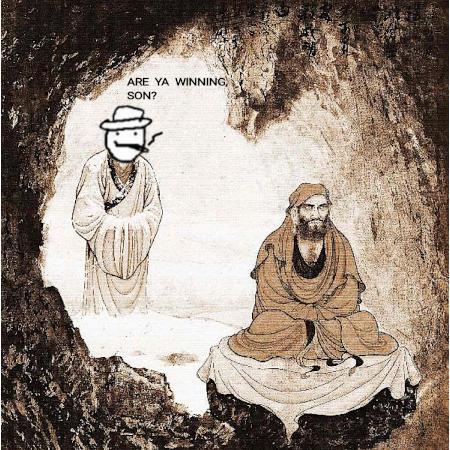
That, to me, was profound. I love my Baudrillard, so seeing the idea of aesthetic taste informing reality in this way feels fresh and relevant. Seeing these AI images and videos is unprecedented, so this advice resonates with me in a way that makes me feel seen. It's important to know that as humans, we have so many little flaws and imperfections that show up as personal signatures. These signatures—even the ones we don't actively perceive—are how we identify ourselves to each other. Even in images and text, these signatures make themselves known.
All we need is taste.
I've been worried about the state of media for quite some time. I've talked before about my general disdain and distrust for film, but now I don't believe about 95 percent of the things I see on the internet and about 99.9 percent of what I see on TV. I feel constantly surrounded by lies and manipulation, and I'm increasingly uncomfortable with the growing consensus that the internet is the real world.
Baudrillard said that the map now makes the territory, but is the internet really the map?
I often find myself remembering that scene in Good Will Hunting where Will and Sean are talking in the park. Sean tells Will that there's a difference between reading about Michelangelo and standing in the Sistine Chapel. I feel that on the internet, we can read about so many things, watch documentaries, or even see footage of real events—but there's a clear difference between experiencing something through a screen and being there yourself.
Here in America, people are sheltered and comfortable. Any citizen who isn't a soldier and never left the country hasn't experienced the devastating impact of war or displacement. We have political tensions here (I'd rather not comment on ICE, thank you), but overall we are in a safe and controlled bubble. That's why so many want to come here: it's strategically and culturally one of the safest places in the world. America is a land of opportunity, as many would say. However, many Americans haven't seen the world outside its borders.
The world is a big place, and there are many competing visions of what a well-run society should look like. Yet despite that, many Americans obstinately view their culture and values as either superior—or even worse—the only ones around. I haven't been to many places outside of America. I've been to Mexico, Guatemala, and Costa Rica. About 99 percent of my life has been spent within my country's borders. For me, this is the only world I really know. I don't like traveling, but I also know that there's so much more in this world than my state, my city, or even my damn house.
I know that other worlds are out there.
I just have to wait for God to let me see them.
Bitcoin Address: bc1qtgqvj6qjxnaxkns20x5rcwnxvv3jqzhduvvxfc